
Its Climate Week in the UK and this is your opportunity to demonstrate what you are doing and what you can do to combat climate change.
For more details click this link to the Cliamte Week web page.

 In 2009 carbon emissions fell but not as much as had been predicted and there are concerns that the recent rapid upward trend will continue.
 The sun's influence on modern day climate change may have been overestimated.
 A UN-backed scheme to reduce carbon emissions from the burning of forests could be one of the big winners of the Copenhagen climate summit, with the possibility of a big injection of funds. The BBC's Paulo Cabral has been to the Amazon to visit one of the most advanced pilot projects.A UN-backed scheme to reduce carbon emissions from the burning of forests could be one of the big winners of the Copenhagen climate summit, with the possibility of a big injection of funds. The BBC's Paulo Cabral has been to the Amazon to visit one of the most advanced pilot projects.
Read the full report on this link.
 Average global temperatures are on course to rise by up to 6C without urgent action to curb CO2 emissions, the lead author of a new analysis says.
Read more by clicking this link to the BBC.
Or go to the home page of the Global Carbon Project.

 The global recession and a range of government policies are likely to bring the biggest annual fall in the world's carbon dioxide emissions in 40 years.
For more information click this link to the BBC.
Alternatively, go direct to the International Energy Agency website.

 One in six homes in England is at risk of flooding, says the Environment Agency, and climate change will raise that number without better protection. Read more by clicking this link.
 The UK needs to plan now for a future that will be hotter and bring greater extremes of flood and drought, says Environment Secretary Hilary Benn. Read more by clicking this link.
 Internal exams are over - hoorah! - and you have a week of rest and recuperation - so what have you missed this week whilst revising?
 The world's most important coral region is in danger of being wiped out by the end of this century unless fast action is taken, says a new report.
Read more on the BBC website
 Climate change is "the biggest global health threat of the 21st Century", according to a leading medical journal.
To read their findings click this link to the Lancet

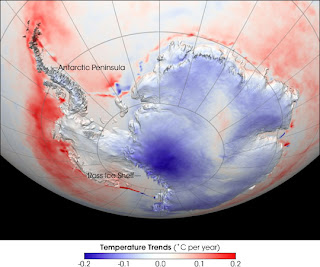
The collapse of a major polar ice sheet will not raise global sea levels as much as previous projections suggest, a team of scientists has calculated.
Writing in Science, the researchers said that the demise of the West Antarctic Ice Sheet (WAIS) would result in a sea level rise of 3.3m (10 ft).
Previous estimates had forecast a rise in the region of five to six metres.
However, they added, the rise would still pose a serious threat to major coastal cities, such as New York.
For more information click this link to the BBC or check out the article in Science.


 Posts
All Comments
Posts
All Comments


